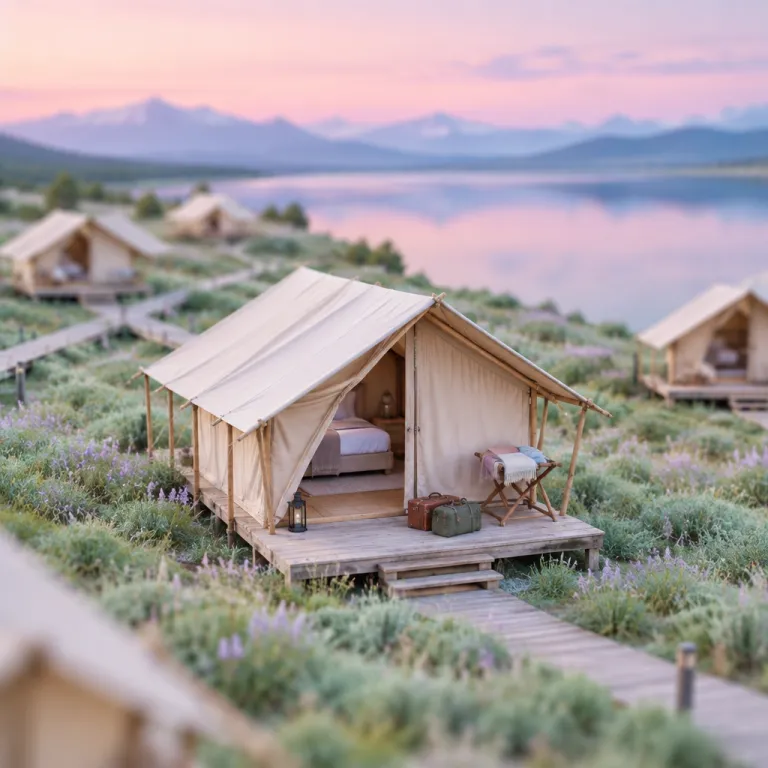
The quiet drama of the final morning in canvas
Hotel departures are about efficiency, while the last hours in a luxury tented suite are about emotion. In a well run safari-style camp or riverside glamping retreat, the final morning is curated as carefully as the first sunrise, and people who choose this kind of canvas accommodation feel that difference in every small ritual. You wake to the soft rasp of the tent walls, the river air on your face, and you realise this temporary hideaway has felt more like a private cabin than any hotel corridor.
In the best glamping tents, staff time the wake up tray so you find coffee still steaming beside your king size bed, with the first light just touching the south facing ridge or river bank. At Singita Ebony Lodge in South Africa, for example, butlers quietly confirm your preferred roast and milk the night before, so the tray feels personal rather than generic. That small, human scale check on your preferences — oat milk, not dairy, or a light breakfast before a longer farewell brunch — turns a simple item on a tray into part of a larger tented-camp experience that you will replay long after you leave. The intimacy of canvas living means you heard the rain in the night, felt the temperature shift before dawn, and those sensory layers make the final hours of any glamping stay unusually vivid.
Couples often step out onto a private porch wrapped in blankets, watching mist lift off a nearby river or desert plain. At Under Canvas Moab in Utah, guests talk about the way the La Sal Mountains appear and disappear in that early light, a view that quietly anchors the whole trip. That private moment is not just scenery; it is the emotional centre of the departure day, and it shapes how you remember the suite tent, the staff, even the firmness of the bed. When a luxury tent camp understands this, it slows the pace, keeps vehicles and cleaning teams out of sight, and lets the last morning breathe.
Thoughtful properties design a clear but gentle structure around leaving so guests never feel rushed to check out. You might be invited on a short sunrise walk, a final birding loop, or a quiet paddle along the river, all of which extend the sense of immersion without turning the schedule into a checklist. At The Resort at Paws Up in Montana, for instance, many guests choose a last horseback ride that ends right at their tent. Back at your suite, staff handle luggage discreetly, leaving you to fold your own small item or two, a symbolic act that acknowledges this was your private space, not just another camping pitch.
Even the administrative side of saying goodbye can feel different when handled with care. Instead of queuing at a front desk, you sit on the private porch of your luxury tent while a host brings a tablet, explains terms and conditions clearly, and processes your credit card with the same calm tone they used when recommending a river walk. A manager at Aman-i-Khás in Rajasthan notes that more than half of their guests now complete check out from a daybed or veranda rather than a reception area, precisely to preserve that sense of calm. That balance of efficiency and grace is what separates a true luxury glamping experience from camping with a king size or queen size bed and a hot tub.
Rituals that turn check out into a lasting memory
What lingers after a stay in a tented camp is rarely the receipt; it is the ritual. Camps that understand romance and nostalgia build a gentle choreography around the final hours, and couples who book stay after stay in glamping tents often cite these details as the reason they return. The best properties treat departure as a final chapter in the story of your stay, not an administrative post script.
One powerful ritual is the last breakfast, often served family style under canvas or on a deck that overlooks a river or savannah. Instead of a rushed buffet, you find a slow, generous meal where staff remember how you take your coffee, which type of eggs you prefer, and whether you are celebrating a birthday party or an anniversary, and this level of attention deepens the overall glamping experience. At Little Governors’ Camp in Kenya’s Maasai Mara, guides often join guests for this farewell meal, swapping stories about lions heard in the night. When a manager stops by your table to check how the suite tent felt at night or whether the king size bed supported your back, it signals that feedback is part of a living culture, not a formality.
Another quiet but powerful moment is the guest book by the firepit. You sit with other people who are also packing up their tents in their minds, and you write a few lines about the unique experience of hearing lions at night or rain on the canvas roof. That act of writing, of turning a private feeling into a shared note on the page, helps fix the glamping memories more firmly than any digital review. At Longitude 131° near Uluru in Australia, many guests mention the red dust on their boots and the silence after dark, details that would be easy to forget without that pause to reflect.
Some luxury tent camps invite guests to a short farewell walk with the same guide who led their first outing. This circular structure — first walk, last walk — gives narrative shape to the stay and makes the glamping accommodation feel like a complete story rather than a random set of activities. When you return to your suite tent after that walk, the way your bags are lined up, the way the bed is smoothed but not stripped, all signal that your presence still matters until the moment you step into the vehicle.
Even the financial close of the stay can be woven into the ritual. A host might sit with you on the private porch, review terms and conditions in plain language, and then, once the credit card slip is signed, ask whether you would like to pencil in dates to book stay for the same type of suite next season. According to internal surveys shared by several East African safari operators, between 30% and 40% of repeat guests now reserve their next trip before leaving camp. For many couples, that is the moment they commit to another luxury tent stay, while the river breeze and the smell of canvas still frame the decision.
For a deeper look at how the first impression shapes the last, read the analysis of why the first fifteen minutes at check in set the tone for an entire tent stay. The same logic applies in reverse on departure day, when the final fifteen minutes can either reinforce the magic or flatten it into a standard hotel style check out. Camps that respect this symmetry tend to create the most memorable farewells for discerning travelers.
Why canvas departures create deeper nostalgia than hotel corridors
There is a reason leaving a tented suite often feels more poignant than checking out of a room in a city tower. Canvas amplifies every sense, and that sensory richness turns even small routines — zipping a tent flap, stepping from bed to rug — into memories that people replay long after the trip. When you leave a glamping tent, you are not just checking out of an accommodation; you are stepping away from a temporary way of living.
In a hotel, climate control and soundproofing flatten the environment, while in a luxury tent you heard the river at night, the wind in the trees, and the distant calls of wildlife. That constant, low level awareness of the outside world makes the interior of the suite tent feel like a private cocoon, and the act of unmaking that cocoon on departure day carries emotional weight that standard camping rarely achieves. You roll your clothes, check the bathroom for a forgotten item, and each movement reminds you how fully you inhabited this canvas space.
Psychologists often note that multi sensory experiences create stronger recall, and a tented-camp farewell is a textbook case. You remember the warmth of the hot tub under cold stars, the texture of the canvas walls under your fingertips, the way the king size or queen size bed framed the view when you first unzipped the tent in the morning. Those details mean that when you later scroll through photos or write a post about the trip, the emotions return with unusual clarity.
There is also the matter of impermanence. Many glamping tents are seasonal or semi mobile, especially in safari regions or along flood prone river systems in the south of Africa or the American South, and guests know, consciously or not, that the exact setting might not exist in the same form next time. That awareness makes the experiences feel more precious and heightens the bittersweet tone of departure, especially for couples who chose the stay as a marker — a birthday party, a proposal, a long delayed honeymoon. When you zip the door for the last time, you are closing a chapter that cannot be perfectly repeated.
Properties that understand this emotional arc design their departure day to honour the nostalgia rather than fight it. They avoid sending cleaning teams to hover outside the tents, they keep radios and vehicle noise low, and they give guests space to take one last walk to the river or sit quietly on the private porch. For an insightful look at how the best camps manage the elements that shape these memories, see the guide on how top properties handle rain, wind and unexpected wildlife, because the way a camp responds to nature during your stay will colour how you feel when you finally depart.
Lighting plays a surprisingly large role in this nostalgia. The glow of a lantern against canvas on your last night, the way dawn seeps through the seams as you pack, all contribute to the unique experience of a glamping accommodation that feels both fragile and deeply comforting. Camps that curate this with intention — as explored in the piece on why the right lantern can matter more than the right mattress in a luxury tent — tend to create departures that guests describe in almost cinematic terms.
Packing up a temporary home: the art of leaving well
The most intimate part of any farewell in a luxury tent is often the packing. In a hotel, you zip a suitcase and roll it down a carpeted corridor, but in a glamping tent you are dismantling a temporary home that has been stitched into the landscape. Every item you touch — the throw on the bed, the robe by the hot tub, the book you left on the private porch — carries a trace of the days you spent here.
Thoughtful camps give guests time and space for this process, often suggesting a loose schedule rather than a hard deadline for check out. You might return from a last walk along the river to find your luggage neatly arranged but the bed still made, the canvas sides of the suite tent still open to the view, signalling that your stay is not over until you decide it is. That small gesture respects the emotional weight of departure and keeps the experience from collapsing into a rushed scramble.
Some properties invite guests to leave a small, non intrusive mark — a note tucked into a leather bound guest book, a stone placed on a cairn near the main path, a short post on a communal board in the lounge. These rituals acknowledge that people bring their own stories to a glamping accommodation and that those stories accumulate over time, turning a collection of tents into a living community. When you participate, the end of your stay becomes not just an ending but a contribution.
From a practical standpoint, the best camps make it easy to check that nothing is left behind. Staff might provide a simple printed checklist in each luxury tent, reminding you to look under the king size or queen size bed, in the safe where your credit card and passports were stored, and on the hooks behind the bathroom door for any forgotten item. This is not about treating guests like children; it is about recognising that the relaxed pace of a glamping experience can make it easy to misplace things.
There is also an art to how staff interact during this phase of leaving. The most skilled teams read the room, offering help with bags or a final drink on the private porch without hovering, and they time their entry into the suite tent only after you have clearly vacated the space. That respect for privacy reinforces the sense that this was your temporary home, not just a camping platform with a size bed and a minibar.
For couples travelling with dogs, a pet friendly policy adds another layer to the departure ritual. You might take one last loop around the property, letting the dog sniff the paths and riverbank that defined its own glamping experiences, before returning to the tent to pack up beds and bowls. When a camp provides discreet waste stations, water bowls at the main deck, and clear terms and conditions for pet friendly stays, the final morning feels seamless rather than stressful.
The rebooking window: why the last two hours matter most
From a hospitality perspective, the final hours of a luxury tent stay are not just sentimental; they are commercially decisive. Many tented camps quietly report that the highest rate of return bookings happens in the last two hours on site, when nostalgia is peaking and the realities of daily life have not yet intruded. Couples who have been weighing whether to book stay again often make the decision while still sitting on the private porch, coffee in hand.
The reasons are straightforward. During a glamping experience, guests are immersed in a setting that feels both removed from routine and intensely real — the river at dusk, the creak of canvas, the comfort of a king size or queen size bed after a long walk — and this contrast sharpens as departure approaches. When a host appears at just the right moment to check whether you would like to hold the same suite tent or try a different type of luxury tent next season, the conversation feels natural rather than transactional.
Smart camps design their check out process around this rebooking window without turning it into a hard sell. They might offer a gentle incentive for guests who commit on the spot, such as priority access to a particular suite or a preferred size bed configuration, clearly explained within transparent terms and conditions. Payment is handled with the same ease as the main bill, often by simply authorising a deposit on the same credit card, so the decision feels like an extension of the stay rather than a separate negotiation.
Digital follow up matters too, but it works best when it builds on the emotional tone set at departure. A thoughtful post stay email that references specific glamping experiences — the private dinner by the river, the surprise birthday party in the main tent, the pet friendly welcome basket for your dog — will feel far more resonant than a generic promotion. When guests read that message back home, the sensory memory of the glamping tent and the wider accommodation returns, and many will click through to adjust or extend the dates they pencilled in before leaving.
For couples, the decision to repeat a stay in a luxury tent is often framed as a promise to each other. You might agree to return to the same south facing riverbank every other year, or to alternate between this camp and another glamping accommodation in a different region, building a private map of tents and suites that mark your shared story. Camps that recognise and respect this emotional dimension — rather than treating guests as interchangeable bookings — tend to cultivate a loyal, high value community of travellers.
Ultimately, the power of a well handled check out lies in how it blends the practical and the poetic. You sign the bill, check the safe, and hand back the key, but you also take one last look at the bed where you watched the dawn, the canvas walls that framed your nights, the river that set the soundtrack for your stay. When a luxury tent property gets this balance right, departure day becomes not an ending but the first step toward the next return.
FAQ
How is check out at a luxury tent camp different from a hotel ?
A glamping departure usually happens in your tent or on a private porch, not at a central desk. Staff handle payment and terms and conditions discreetly, often using a tablet and your existing credit card details, while you sit with a view of the river or landscape. The process is slower, more conversational, and designed to preserve the mood of the stay rather than rush you out.
What time should I plan to leave on departure day ?
Most luxury tent camps set a late morning check out, but they often build in flexibility for guests with transfers or flights. You can usually enjoy breakfast, a short activity, and unhurried packing before staff need access to the suite tent or glamping tent for cleaning. It is wise to confirm exact times when you book stay so you can plan your final morning rituals.
Can I rebook my next stay during check out ?
Yes, many properties encourage guests to reserve future glamping experiences during the final morning, when memories are freshest. A host can usually hold specific dates, a preferred type of suite, or a particular size bed configuration and take a deposit on your credit card. This on site rebooking often gives you better choice of tents and sometimes access to preferred rates or priority waitlists.
What should I check before leaving my tent ?
Before you depart, carefully check the safe, bedside tables, bathroom shelves, and under the bed for any forgotten item. Make sure you have passports, wallets, and any electronics, as replacing these after a remote glamping experience can be difficult. If you are unsure, ask staff for a simple checklist; many camps provide one in each luxury tent to make departure smoother.
Are luxury tent camps usually pet friendly ?
Policies vary widely, but an increasing number of glamping accommodation providers offer pet friendly options, especially in regions where private vehicles and fenced areas make this practical. Always confirm pet friendly terms and conditions before you book stay, as some camps restrict pets to certain tents or require specific vaccinations. When allowed, you can expect basics like water bowls, waste bags, and sometimes even a small bed for your dog in the suite tent.