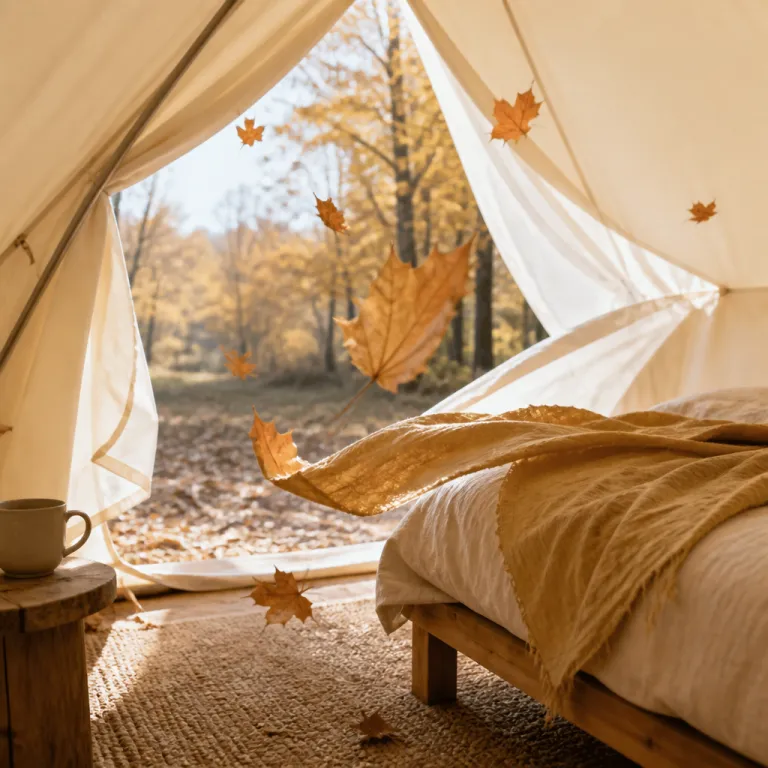
Why fall foliage glamping tent properties make autumn feel different
Step into a canvas tent at first light and fall feels sharper. The thin walls of well designed fall foliage glamping tent properties in autumn let in scent, sound, and temperature in a way no lodge window can match, so your first breath carries cold air, damp earth, and the faint sweetness of decaying leaves. That sensory immersion turns a simple glamping trip into a fully textured fall camping experience, especially for families who want their children to feel the season rather than just see its color from a car.
Canvas changes how you read the day ; the glow of foliage at peak color filters through the fabric, so even inside the tent you sense when the sun shifts and when the wind lifts the canopy. In a hard walled room, fall foliage is a view framed by glass, while in foliage glamping the entire stay becomes a moving light show that starts before sunrise and runs until the last embers of the campfire fade. Parents notice how quickly children adapt to this rhythm, waking early to check the trees and drifting to sleep to the rustle of leaves rather than the hum of air conditioning in summer.
There is also a psychological reset that comes with camping in autumn, especially in carefully sited luxury tents that face a lake or a stand of maples in a state park or national forest. When you book a stay at one of these fall foliage glamping tent properties in autumn, you are choosing to trade convenience for connection, but the trade is gentle ; heated mattresses, proper duvets, and hot showers soften the edges of the camping trip while keeping the essential proximity to the outdoors. For many premium families, that balance is the reason they now book glamping instead of traditional camping sites during fall colors season.
Where canvas meets color: New England’s most atmospheric autumn tent stays
New England remains the reference point for fall foliage, and its best glamping sites understand that the canvas must face the trees, not the parking lot. In the White Mountains of New Hampshire, several luxury tent camps position each tent along river bends and forest clearings so that guests wake to peak color reflected in the water and can walk directly from their deck to nearby hiking trails with minimal effort. Families planning a glamping trip here should aim to book their stay for late September into mid October, when the combination of crisp air and saturated foliage is at its strongest.
Along the north shore of Lake Superior, upscale camping sites now extend their season well beyond summer to capture the late September and early October wave of leaf peeping travelers. Canvas suites with wood burning stoves, proper beds, and private decks turn what used to be a short camping window into a full autumn stay, with fall foliage glamping tent properties in autumn offering guided walks, shoreline picnics, and canoe outings timed to the changing color. When you compare what you really pay for in a luxury canvas stay to a traditional room, as explored in this detailed guide on what you really pay for when you book a luxury yurt stay, the premium often reflects access to these carefully curated natural stages.
State park authorities in Vermont and Maine have also begun partnering with private operators to introduce small clusters of glamping tents inside or just outside state park boundaries, giving families a way to enjoy fall camping without sacrificing comfort. These sites typically offer easy access to lakes, short hiking trails suitable for children, and ranger led leaf peeping walks that explain why some valleys reach peak color earlier than nearby ridges. When you book a stay at these properties, plan at least one unscheduled day with no driving, so you can simply sit by the lake, watch the falls in nearby streams, and let the day unfold at the slow pace that autumn deserves.
Canvas corridors of color: Appalachia, the Great Smoky region, and beyond
Move south along the Appalachian spine and the rhythm of fall foliage shifts, but the appeal of tent based stays only deepens. In the Great Smoky region, luxury glamping camps near the borders of Great Smoky Mountains National Park and adjacent national forest land orient each tent toward ridgelines where morning mist pools in the valleys and then lifts to reveal bands of red, orange, and gold. Families who time their camping trip for mid October often enjoy a longer window of fall colors than in New England, with some sheltered hollows holding onto their foliage well into late October.
Properties here understand that autumn is the main event, so they design programming around it ; cider pressing afternoons, guided mushroom foraging, and campfire storytelling replace the poolside activities of summer. When you book a stay at one of these fall foliage glamping tent properties in autumn, ask specifically about tent placement, because some sites offer direct views into the smoky mountains while others face quieter creek valleys that are better for younger children. A useful companion piece on what you really pay for when booking a luxury yurt stay can help you evaluate whether the premium for a ridge view tent is justified for your family’s style of trip.
Further west, in the Rockies, canvas camps near national park and national forest gateways focus on aspens rather than maples, which means the palette shifts from mixed reds to luminous gold. Here, peak color often arrives earlier, sometimes in mid September, so families planning a glamping trip need to book their stay in late summer and be ready for colder nights that feel closer to winter than autumn. The reward is waking in a heated tent to see entire mountainsides of aspens shimmering in the wind, a reminder that fall foliage is not a single event but a moving wave that rolls from the high mountains down to the valleys over time.
How to book the right autumn tent stay for your family
Securing the best fall foliage glamping tent properties in autumn requires treating the process more like booking a coveted restaurant table than a last minute camping pitch. For New England and the White Mountains, aim to book your stay six to eight weeks before your target dates, which usually means making firm plans by early September for a mid October trip at peak color. In the Great Smoky area and other southern ranges, you can sometimes wait slightly longer, but fall camping weekends around state park and national park gateways still sell out quickly once the first leaf peeping reports appear.
When comparing sites, look beyond the headline images and study the map ; you want tents that face the main foliage corridor, whether that is a lake edge, a river bend, or a slope of mixed hardwoods. Ask whether the property offers autumn specific amenities such as extra blankets, heated mattress pads, and enclosed dining tents, because these details can transform a chilly night into a memorable family stay. For more nuanced insight into how under the radar camps quietly excel, this editorial on glamping sites with no social media presence worth finding is a useful reference when you are deciding where to book.
Timing matters as much as location ; late September is often ideal for higher elevation foliage camping, while valleys and coastal areas may hold their fall colors into late October, especially along the north shore of larger lakes. Families should plan at least one flexible day in their camping trip to adjust for weather, because rain can mute color but also intensify the scent of the forest and the drama of waterfalls and small falls along hiking trails. In every case, the goal is the same ; to step out of your tent, feel the cold air on your face, and know that for this brief time, the turning leaves are not a backdrop but the main event of your stay.
FAQ
When is the best time to plan a fall foliage glamping trip with children ?
For most families in the United States, the sweet spot for a fall foliage focused glamping trip runs from late September to mid October, with exact timing depending on region and elevation. Higher mountain areas, such as the Rockies and the upper White Mountains, often reach peak color earlier, while lower valleys and coastal regions can hold their fall colors into late October. If you are traveling with younger children, aim for slightly earlier dates when evenings are cool but not yet harshly cold, which makes time around the campfire more comfortable.
How far in advance should I book a stay at popular autumn tent properties ?
For marquee regions such as New England, the Great Smoky corridor, and major state park gateways, you should plan to book your stay six to eight weeks in advance for peak weekends. Midweek dates sometimes remain available closer to arrival, but the most atmospheric tents with direct foliage views usually sell first. If your schedule is flexible, consider arriving Sunday to Thursday, when rates can be lower and popular hiking trails and lakefront areas are noticeably quieter.
What is the main difference between autumn glamping and traditional fall camping ?
Autumn glamping replaces much of the logistical work of traditional fall camping with hotel level services while keeping the essential canvas experience. Instead of pitching your own tent and managing all cooking, you arrive to a fully furnished structure with proper beds, heating, and often a private bathroom, which is especially helpful for families with children. The trade off is cost, but many travelers find that the extra comfort allows them to stay longer and enjoy more early morning and late evening time outdoors, when fall foliage is at its most atmospheric.
Are national park and state park based tent stays better than private sites nearby ?
Staying inside a national park or state park usually offers closer access to hiking trails, lakes, and signature viewpoints, but tent options can be more limited and book out quickly. Private glamping sites just outside park boundaries often provide larger tents, more amenities, and easier parking, which can be valuable for families carrying extra gear. A balanced strategy is to use a well equipped private camp as your base and then spend your days inside the park, returning to a warm, comfortable tent each evening.
What should families pack for a fall foliage focused glamping stay ?
Even when properties provide heating and quality bedding, you should pack layered clothing, hats, and gloves for early mornings and evenings, because temperatures in the mountains and near lakes can drop quickly. Bring waterproof outerwear and footwear suitable for muddy trails, as autumn weather often shifts between clear skies and passing showers. Finally, consider packing simple comforts such as a favorite blanket for children, a thermos for hot drinks, and a small headlamp for each family member, which makes moving around the tent sites after dark safer and more relaxed.