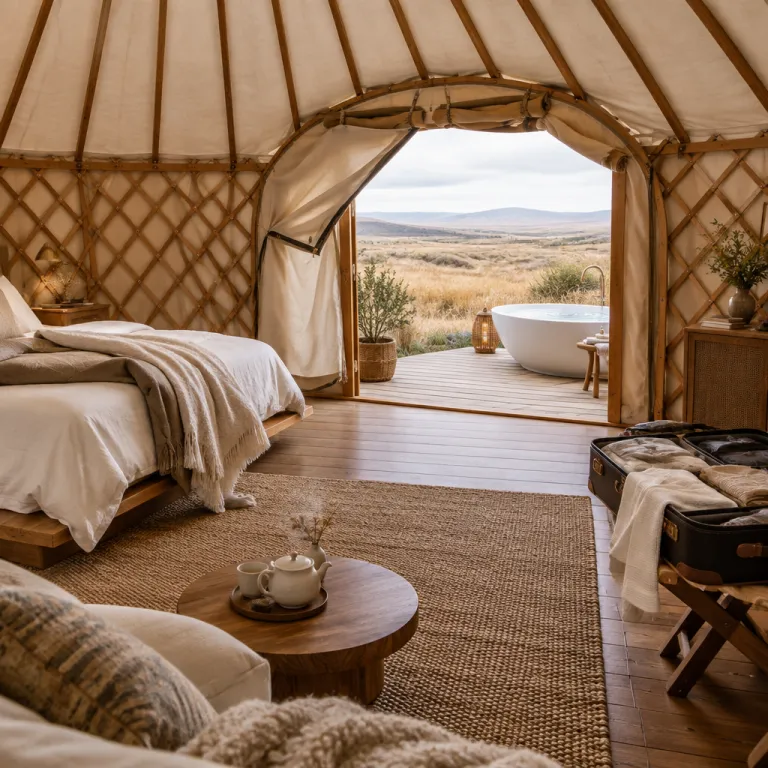
Section 1 – What is a yurt in modern luxury travel ?
Many travelers ask what a yurt really is when browsing a luxury tent booking website. A yurt is a circular tent-like structure with a low wall, a domed roof, and tension bands that originated as a portable dwelling for nomadic people in Central Asia. In premium hospitality today, yurts have evolved into refined canvas-and-wood pavilions that blend traditional engineering with modern comforts for elevated camping stays.
Historically, the Mongolian ger and other traditional yurts were designed for full time yurt living on the steppe. These early yurts used a wooden lattice structure, thick felt insulation, and a central support ring that left an opening in the roof for smoke and light. Luxury properties reinterpret this ger concept with modern yurts that keep the circular structure but add glass doors, proper bathrooms, and curated interiors. As one North American camp owner notes in an American Glamping Association case study, “Guests love that a yurt feels rooted in history but functions like a small, well-designed hotel room.”
When you compare a classic camping tent with a yurt tent, the difference in space and stability is immediate. A camping yurt or any of the larger yurt tents usually offers standing height throughout, a solid door, and framed windows that open, so each opening window brings in fresh air without losing privacy. For guests who want to understand what yurt design means in practice, think of it as a hybrid between elegant tents and compact yurt homes that feel surprisingly permanent.
Section 2 – From Mongolian ger to central Asian inspired luxury yurts
The story of what a yurt represents starts in Central Asia, where nomadic herders needed portable homes that could be dismantled quickly. In Mongolia, the ger became the archetype of traditional yurts, with a circular footprint, a central support, and thick felt insulation made from sheep wool. This Central Asian heritage still shapes how modern yurt architects think about airflow, structure, and the relationship between people and landscape.
On high end camping estates, designers keep the symbolic central roof ring that once framed the stars above the steppe. Some modern yurts even echo the original ger layout, placing the bed opposite the door and keeping a clear central axis that guides movement and daily living. When you book a camping yurt in a mountain reserve or coastal park, you are stepping into a refined version of these historic homes, adapted for shorter stays rather than full time nomadic life.
Landscape also plays a decisive role in how yurts feel, just as it did across Central Asia. Luxury operators in North America now position yurt tents to frame dramatic views, following the same logic as nomadic camps that oriented each camp yurt to shelter from prevailing winds. For a deeper look at how terrain shapes tented stays, many travelers consult guides on how landscape shapes the tent experience before choosing between forest yurts, desert yurts, or coastal yurt rentals.
Section 3 – Inside a luxury yurt : structure, insulation, and comfort
Understanding what a yurt offers inside helps you choose between different luxury tents on a booking platform. The core structure usually combines a circular wooden lattice wall, radial roof rafters, and a compression ring that keeps everything in tension, which makes yurts remarkably stable in wind compared with many standard camping tents. High end properties upgrade this structure with engineered timber, reinforced tension cables, and premium roofing membranes that perform well across seasons.
Insulation is where the gap between traditional yurts and modern yurts becomes very clear. Classic Mongolian ger designs relied on layered felt for insulation, while a modern yurt in a luxury camp might use wool batts, reflective barriers, and insulated floors to maintain comfortable temperatures. If you are planning yurt camping in cooler regions, it is worth reading expert advice on how to keep a luxury tent warm so that your chosen yurt rentals match your expectations for winter comfort.
Interior layouts in yurt homes used for tourism now rival upscale hotel suites. A camping yurt may feature king beds, freestanding bathtubs, and lounge areas that make yurt living feel indulgent rather than rustic, while each opening window is carefully placed to frame views and manage cross ventilation. One guest at a coastal yurt resort described it as “all the romance of camping, but with a real mattress, hot water, and space to unpack.” Couples comparing a yurt tent with other romantic tents often look at guides on romantic tent escapes to decide whether a modern yurt or another style of tent best suits their trip.
Section 4 – Yurt camping versus classic camping : what travelers should know
For many guests, the first real contact with what a yurt is comes through yurt camping at a nature resort. Compared with classic camping in small tents, a camping yurt offers fixed beds, proper flooring, and often private bathrooms, which changes the entire rhythm of daily living. People who usually avoid camping because of discomfort often find that modern yurts provide the right balance between immersion in nature and hotel level ease.
Space is another decisive factor when comparing a standard tent with a yurt tent on a booking website. Yurt tents typically range from about 16 to more than 30 square metres, which allows separate zones for sleeping, relaxing, and sometimes working, while traditional yurts used by nomads were sized to match family needs and livestock patterns. This extra space means that families, groups of friends, or couples staying for more time can unpack properly and treat the yurt as a temporary home rather than a simple shelter.
Service levels also differ between simple camping and curated yurt rentals. Many camp yurt clusters in North America and the United States now offer concierge services, chef prepared breakfasts, and guided activities that feel closer to a resort than a campground, while still using tents as the primary structures. When you evaluate what yurt options suit you best, check whether daily housekeeping, heating, and private decks with opening window panels are included, because these details define the luxury experience.
Section 5 – Where to stay in yurts : from Pacific Yurts to North America icons
Once you understand what a yurt is, the next question is where to stay. In the United States, brands such as Pacific Yurts helped popularise the modern yurt by supplying durable structures to state parks, private resorts, and independent hosts. Pacific Yurts reports that its designs have been installed in more than 3,000 locations across North America and beyond, from coastal forests to high desert plateaus, each adapted to local climate and landscape.
Luxury yurt rentals now appear on premium booking platforms alongside villas and safari tents. Some properties use a single modern yurt as a honeymoon retreat, while others build entire villages of yurts that echo the layout of traditional yurts in Central Asia but add spas, fine dining, and curated excursions. When you browse these options, pay attention to whether each yurt tent is designed for seasonal use or for near full time operation, because insulation levels and roof materials vary significantly.
Travelers who want to live in a yurt for a longer time sometimes transition from short term camping yurt stays to purchasing their own yurt homes. In that case, a stay in a camp yurt at a resort that uses Pacific Yurts or similar suppliers can act as a real world showroom, allowing you to test how yurt living feels in different climates. Whether you plan to live in a yurt full time or simply enjoy occasional yurt camping weekends, the diversity of yurts across North America means there is always another landscape and structure to experience.
Section 6 – How to choose the right yurt stay for your trip
Choosing between different yurts on a luxury booking website starts with clarifying what you want from the trip. If you are curious about what a yurt feels like for yurt living, look for larger yurt tents with defined lounge areas, strong insulation, and multiple opening window panels that mimic compact yurt homes. Guests who prefer a lighter camping feel may opt for smaller camping yurt options that keep the circular structure but use simpler finishes and shared facilities.
Climate should guide your decision as much as interior design. In colder regions of North America and Central Asia inspired mountain resorts, prioritise modern yurts with insulated floors, efficient stoves, and well sealed roofs, because these details matter for comfort over time. In warmer coastal or desert locations, a modern yurt with high roof vents, shaded decks, and carefully placed windows will keep the interior cool while still honouring the traditional ger concept of airflow through the central ring.
Finally, consider how much privacy and service you expect from your yurt rentals. Some camp yurt clusters in the United States feel social and open, with shared firepits and communal kitchens, while others space yurts widely to create secluded retreats for people who want quiet living and perhaps to test whether they could live in a yurt full time. When you weigh what yurt style suits you best, remember that every tent, from the simplest camping tents to the most refined modern yurt suites, reflects a long lineage of nomadic homes adapted to contemporary travel.
Key figures about yurts and luxury camping
- According to the American Glamping Association’s 2023 industry overview, the luxury camping market in the United States has expanded rapidly in recent years, with yurts consistently listed among the most requested tent structures for high comfort stays. Readers can consult the association’s published industry reports for current growth figures.
- Industry surveys from North American outdoor hospitality groups indicate that guests staying in yurts are often willing to pay a premium per night compared with standard camping tents, reflecting the perceived value of space and amenities. For example, some American Glamping Association member properties report nightly rates for yurts that are 20–40% higher than comparable tent sites, though exact percentages vary by region and property type.
- Data released by several state park systems in the United States show that yurts frequently achieve high occupancy during peak seasons, in some cases outperforming traditional cabins and standard campsites. For instance, Oregon State Parks has reported peak season occupancy for its Pacific Yurts–style units above 80% in multiple coastal parks, with detailed figures available in annual park or tourism reports.
- Manufacturers such as Pacific Yurts state that a well maintained modern yurt structure can last more than 20 years, which makes yurts a viable option for both resorts and people considering semi permanent yurt homes.
FAQ about yurts and luxury tent stays
What is a yurt and how is it different from a tent ?
A yurt is a circular, framed structure with rigid walls and a domed roof, originally used as a portable home by nomadic people in Central Asia. Unlike most camping tents, yurts use a wooden or metal frame, solid doors, and robust insulation, which makes them feel more like compact homes. In luxury travel, modern yurts often include full bathrooms, proper beds, and heating systems.
Are yurts warm enough for year round stays ?
Traditional yurts used thick felt insulation and central stoves to stay warm in harsh Mongolian winters, and modern yurts build on this principle with advanced materials. Many luxury yurt rentals in North America add insulated floors, double glazed windows, and efficient heaters to support three season or even full time use. Always check the insulation details and heating options of each yurt before booking for winter.
Is yurt camping suitable for families with children ?
Yurt camping can work very well for families because yurts offer more space and stability than most standard tents. Children benefit from having room to move, proper beds, and secure doors, while parents appreciate the mix of outdoor access and indoor comfort. When booking, look for yurts with safe railings on decks, good ventilation, and layouts that allow adults to keep an eye on sleeping areas.
Can I live in a yurt full time ?
Some people do choose to live in a yurt full time, especially in rural parts of the United States and other regions of North America. A full time live in yurt usually needs upgraded insulation, reliable heating, and compliance with local building regulations, which differ by region. If you are considering this lifestyle, staying in several modern yurts through short term rentals is a practical way to test how yurt living feels across seasons.
What should I look for when booking a luxury yurt stay ?
When booking a luxury yurt, focus on structure quality, insulation, and amenities. Check the size of the yurt tent, the type of roof and wall materials, and whether there are private bathrooms, heating, and well placed windows that open. Location also matters, so consider whether you prefer secluded forest yurts, coastal yurts with sea views, or Central Asian inspired mountain camps.
