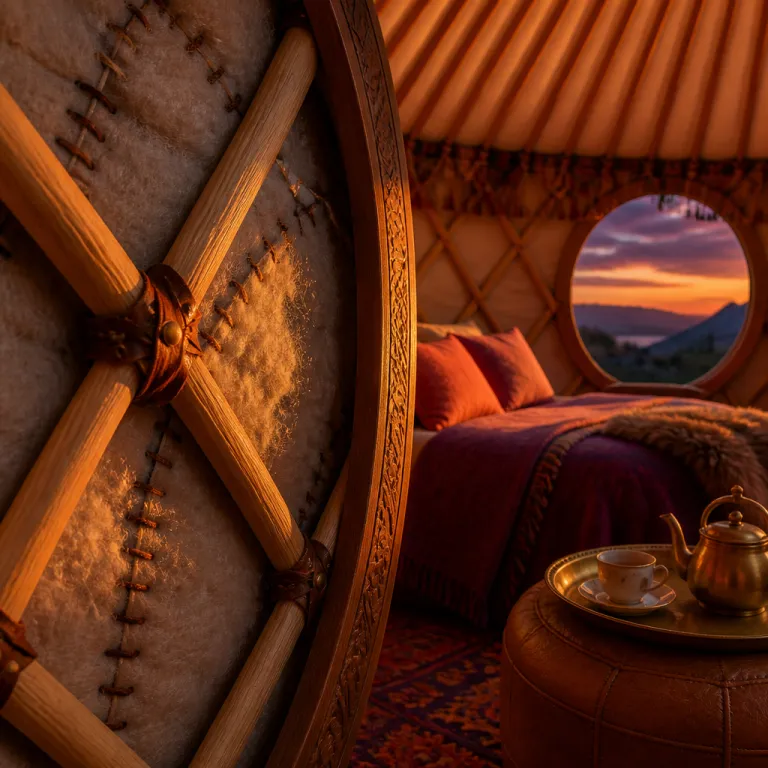
What a Yurt Really Is for the Luxury Traveler
Section 1 – What a yurt really is for the luxury traveler
When travelers ask what a yurt is, they are usually picturing a simple camping shelter, yet the reality is far more architectural and surprisingly refined. A yurt is a portable, circular dwelling with a wooden frame and a tensioned fabric or felt cover, originally created as a practical structure for Mongolian and Turkic nomads moving across Central Asia. In luxury travel today, this same circular structure has evolved into a sophisticated yurt tent concept, where the traditional Mongolian ger form meets high end interiors and curated guest services.
Historically, the Mongolian ger answered a very specific question about what shelter designs could withstand harsh continental climates while remaining mobile. The circular frame, built from a flexible lattice wall and roof poles, distributes wind and snow loads evenly, which is why traditional yurts remained central to nomadic life for centuries. Modern yurts keep this proven structure but replace felt and skins with insulated fabrics, glass doors, and sometimes even underfloor heating, creating a contemporary yurt that feels closer to a suite than to classic tent camping.
For guests browsing a premium booking website, understanding what yurt options exist helps align expectations with reality. Some properties offer authentic Mongolian ger stays with minimal modifications, while others feature American yurts or Pacific yurts that reinterpret the original design for local landscapes. When you read a description that mentions yurt tents or a luxury yurt tent, you can expect a circular interior of around 6 meters in diameter, often with a central skylight in the roof and enough floor space for a king bed, lounge area, and sometimes a freestanding bathtub.
Section 2 – From nomadic history to modern glamping elegance
The history of yurts stretches back at least two and a half millennia, when Central Asian nomads needed a portable yet durable structure that families could assemble quickly. Classical authors writing in the 5th century BC, such as Herodotus, described tent like circular dwellings used by steppe peoples, highlighting how long communities have relied on this ingenious design. That longevity explains why yurts popular in luxury glamping today still echo the same circular structure, lattice wall, and central roof ring that defined the original Mongolian ger.
On a high end booking platform, you will see this history translated into different design options that balance authenticity and comfort. Some retreats focus on traditional yurts with felted wool insulation, low doorways, and a visible wooden frame, while others lean into modern yurts with glass fronts, private decks, and spa style bathrooms. When couples search for romantic tent escapes, they often compare a bell tent with a yurt tent, and many ultimately choose the yurt because the rigid frame and higher roof create a more spacious, cocoon like atmosphere that suits special occasions.
Glamping operators in North America have embraced both traditional and modern interpretations, creating a spectrum of yurt camping experiences. At one end, you might find simple yurt tents on raised platforms, ideal for people who want to stay close to classic tent camping but with better weather protection. At the other, you will encounter American yurts with full insulation, hardwood floors, and designer furnishings, where the only reminder of camping is the circular roof and the sound of rain on the outer fabric.
Section 3 – Anatomy of a yurt: structure, materials, and space
Understanding what a yurt is structurally helps you read property descriptions with a more informed eye. The core structure combines a collapsible lattice wall, a circular compression ring at the top, and a series of rafters that connect the wall to the roof opening, creating a stable frame without internal pillars. This ingenious design allows traditional yurts and modern yurts alike to offer an open plan interior, which luxury properties use for generous beds, lounge corners, and sometimes even private dining setups.
Traditional construction relied on wood, felt, and animal skins, which answered the practical question of what materials were available to Central Asian nomads moving with the seasons. Today, Pacific yurts and other commercial American yurts often use kiln dried timber, high performance fabrics, and insulated liners, while still respecting the original circular geometry. Many high end yurt tents in North America add glazed doors, hardwood decks, and panoramic windows, so the structure feels closer to a pavilion than to a basic tent; if you are curious how landscapes influence these shelter designs, specialist features on how landscape shapes the tent experience offer useful context.
From a guest perspective, the most noticeable elements are the circular floor plan and the central roof opening, which often doubles as a skylight. Many luxury operators position the bed directly under this roof feature, turning stargazing into part of the nightly ritual and elevating the sense of glamping beyond standard tent camping. When comparing tents, bell tent structures rely on a central pole and guy lines, while yurt tents use the self supporting frame and lattice wall, which generally makes them feel more solid under wind and more comfortable for longer stays.
Section 4 – Yurts in luxury glamping: from camping to curated stays
For many travelers, the first encounter with yurts comes through glamping, where the question shifts from what a yurt is to how it feels as a hospitality product. Luxury yurt camping takes the essential strengths of the circular structure and layers in hotel style bedding, curated amenities, and attentive service, so the experience sits between camping and a high end suite. In this context, yurts popular with discerning guests often feature private bathrooms, climate control, and thoughtful lighting that highlights the wooden frame and roof geometry at night.
Operators in North America have refined different tiers of yurt tents to match varied expectations. Entry level yurt camping options might share facilities and keep interiors simple, while premium American yurts introduce plush textiles, custom furniture, and sometimes in room wellness features such as soaking tubs or infrared saunas. At the very top end, modern yurt collections on specialist booking sites can rival small lodges, with multiple interconnected yurts forming a private compound that suits families or small groups seeking privacy without losing the sense of being in a tented retreat.
Compared with classic tent camping, the main advantage lies in the rigid frame and insulated walls, which extend the viable season and improve acoustic comfort. Guests who might hesitate about a standard tent often feel reassured by the solid door, defined windows, and the visible structure of the lattice wall and rafters, which read more like architecture than like temporary canvas. Many properties also integrate stargazing features into the central roof opening or adjacent decks, and some of the most atmospheric examples appear in curated collections of stargazer tents and skylight canopies that highlight how a yurt tent can frame the night sky.
Section 5 – Regional styles: from central Asia to North American retreats
Every yurt you see on a booking website carries traces of its Central Asian origin, even when it stands on a coastal bluff in North America. Traditional yurts from Mongolia and neighboring regions use a low profile, thick felt insulation, and a smoke hole at the top, reflecting both climate and cultural practices. When these forms migrated into western glamping, designers adapted the structure to different building codes, weather patterns, and guest expectations, creating distinct families such as Pacific yurts and other American yurts tailored to the United States and Canada.
In Mongolia, the Mongolian ger remains a living tradition rather than a nostalgic object, and many operators now offer hosted stays where guests can experience daily life inside a working family ger. These experiences answer a deeper version of the question what yurt living really means, beyond the aesthetics of circular tents and wooden frames. Travelers who value cultural context often combine a luxury yurt tent stay with guided visits to nomadic communities, learning how people assemble the lattice wall, tension the roof, and organize the interior according to long standing customs.
By contrast, North American yurt camping focuses more on landscape immersion and comfort than on nomadic mobility. Properties in the United States might anchor modern yurts permanently on wooden platforms, connect them to utilities, and style them with regionally inspired interiors, from desert minimalism to forest lodge warmth. Even so, the essential structure remains recognizably Central Asian in origin, and thoughtful hosts will often share a short history of yurts in their welcome materials, helping guests understand what makes these tents different from a bell tent or other canvas shelters.
Section 6 – How to read yurt listings on luxury booking websites
When you browse a luxury and premium booking website for tents, it helps to translate marketing language into concrete expectations about the yurt structure. If a listing mentions a modern yurt or designer yurt tent, look for details about insulation, heating or cooling, and bathroom facilities, because these elements determine whether the stay feels closer to camping or to a hotel suite. Descriptions that highlight the lattice wall, circular floor plan, and central roof dome usually indicate a more architecturally faithful interpretation, which many guests find both atmospheric and practical.
Pay attention to how properties position their yurts relative to other tents on site, especially bell tent or safari tent units. A resort might use yurt tents as its premium category, with larger diameters, better views, and more privacy, while standard tents serve as entry level options for people who prioritize budget over space. When you see references to American yurts or Pacific yurts, you can expect compliance with North American building standards, which often translates into sturdier frames, higher quality fabrics, and more reliable climate control than in basic tent camping setups.
Finally, consider the wider experience around the yurt, not just the structure itself, because context shapes how you will remember the stay. Some guests prefer intimate clusters of yurts popular with couples, while others seek stand alone units where the only visible structure is their own circular tent framed by landscape. If you are unsure what level of immersion you want, ask the property directly how far the yurts are from shared facilities, what views the central roof opening captures, and how the design balances openness to nature with privacy and comfort.
Key figures about yurts and luxury camping
- Average yurt diameter for many traditional and modern models is around 6 meters, according to reporting by National Geographic, which provides enough space for a king bed, seating area, and storage without feeling cramped.
- Set up time for a standard yurt structure ranges from 30 minutes to 3 hours depending on size and crew experience, making it significantly faster to deploy than most permanent cabins of comparable floor area.
- Yurts have been documented in written sources since at least the classical era, with steppe dwellings noted by authors such as Herodotus in the 5th century BC, showing a continuity of shelter design that few other tent based structures can match over such a long historical period.
- Eco tourism operators increasingly favor yurts because the circular footprint and modular frame allow installation with minimal ground disturbance compared with many fixed foundation buildings, a benefit often highlighted in UNESCO reports on nomadic cultures and low impact development.
FAQ about what a yurt is in luxury travel
What is a yurt made of in traditional and modern settings ?
Traditionally, a yurt is made of a wooden lattice wall, roof poles, and a central compression ring, all covered with layers of felt or skins for insulation. Modern yurts keep the same frame but often use engineered timber, technical fabrics, and insulated liners to improve comfort and durability. In luxury glamping, interiors may add hardwood floors, glass doors, and high end furnishings while preserving the circular structure.
How long does it take to set up a yurt for guests ?
For an experienced team, assembling a standard sized yurt typically takes between 30 minutes and 3 hours, depending on diameter and site conditions. Temporary glamping events may erect and dismantle yurts repeatedly, while permanent resorts usually install them once on fixed platforms. The relatively short setup time compared with cabins is one reason yurts are popular in eco sensitive locations.
Are yurts still used today outside of tourism ?
Yes, yurts remain everyday homes for many nomadic families in Mongolia and other parts of Central Asia, where the Mongolian ger continues to support mobile herding lifestyles. At the same time, yurts have spread to North America and Europe as alternative dwellings, studios, and hospitality units. This dual role explains why you will see both traditional yurts in rural landscapes and modern yurts on high end booking platforms.
What is the difference between a yurt and a bell tent ?
A yurt uses a self supporting circular frame with a lattice wall and roof rafters, while a bell tent relies on a central pole and guy lines for tension. The yurt structure usually feels more rigid and spacious, with vertical walls that make furniture placement easier. For luxury stays, many guests prefer yurt tents because they combine the romance of canvas with the practicality of a semi permanent building.
Is a yurt stay closer to camping or to a hotel experience ?
The answer depends on how the property outfits its yurts, because the same structure can support very different levels of comfort. Simple yurt camping setups may feel close to tent camping with shared facilities, while premium American yurts with private bathrooms, heating, and curated interiors feel much closer to a hotel suite. When booking, review photos and amenity lists carefully to match the yurt design with your preferred balance of nature and luxury.
trustful_expert_quotes sources: National Geographic coverage of traditional yurts, UNESCO reports on nomadic cultures in Central Asia, and publications from the Mongolian Ministry of Environment and Tourism.