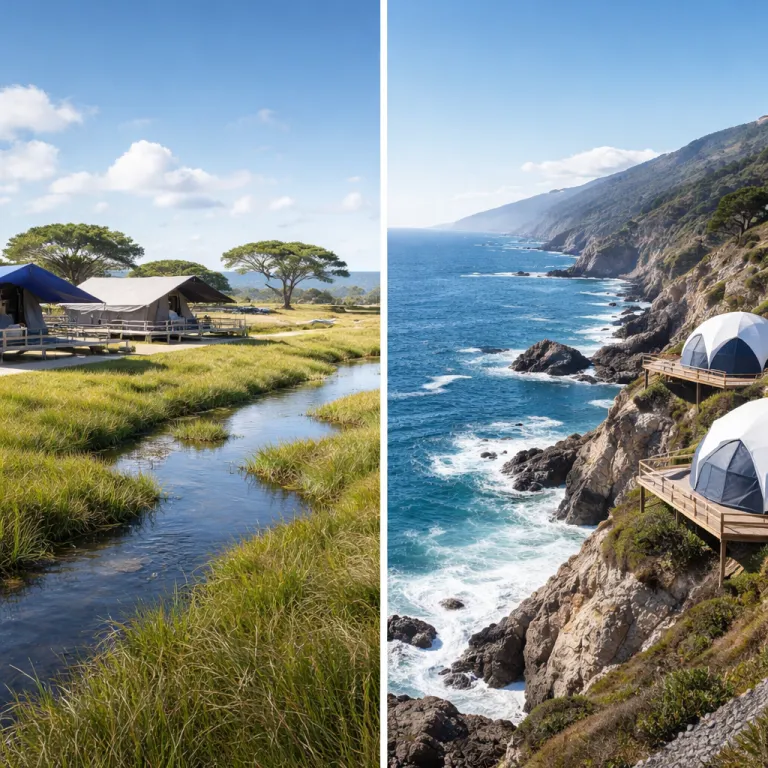
Savannah and safari: tented camps where wildlife writes the script
On the African savannah, many of the most memorable luxury camping experiences feel shaped by the horizon itself. Canvas walls stay deliberately open so you can unzip your tent and step straight into an open air theatre of grazing elephants, distant lion calls, and a sky that never quite goes dark. Here, a luxury tent is less a room and more a finely tuned listening post for the wild.
Classic safari glamping destinations in Kenya and Tanzania rely on tented designs that prioritise airflow, shade, and uninterrupted view lines across the plains. Operators such as Angama Mara in the Mara Triangle use elevated decks and wide verandas so each suite can frame sunrise over the grasslands, while still feeling like a refined lodge with polished service and a slow, elegant breakfast ritual. These properties show how high end canvas camps work with the savannah’s heat and light, not against them with heavy insulation and sealed windows.
Wildlife proximity defines the experience here, so structure and layout follow the animals rather than the road. Mobile safari camps track the great migration, while permanent bases in private conservancies offer quieter riverbank locations where hippos grunt below your canvas at night. If you are planning luxury Zambia vacations for discerning safari travellers, for example, you will find that reputable properties listed on specialist platforms clearly describe safety barriers, guiding standards, and levels of open air immersion, and the most rewarding stays feel almost transparent to the landscape.
Pricing in these safari regions reflects remoteness and logistics rather than pure tent comfort. Industry overviews and lodge rate sheets indicate that a typical mid range tented camp might start around US$400–700 per person per night, while top tier lodges can exceed US$1,500 in peak season. Flying in fresh ingredients for breakfast and sundowner snacks, staffing a full guiding équipe, and maintaining vehicles across rough tracks all add to the nightly rate, which is why a seemingly simple tent can cost more than a city hotel suite. Yet for many travellers, the chance to sleep in a canvas suite while hearing hyenas whoop ten metres away is the very definition of luxury, and it is exactly this raw proximity that keeps East Africa at the top of any list of standout glamping destinations.
Coastlines and cliffs: domes, pods, and sea-salt canvas
Coastal glamping destinations trade big game for big weather, and the tents change shape accordingly. On exposed headlands in places like Big Sur or New Zealand’s South Island, many sought after oceanfront camps favour low profile domes and pods that can take a Pacific gale without flapping all night. You still get the romance of canvas, but the engineering quietly borrows from maritime design rather than safari tradition.
In these ocean facing properties, the luxury lies in the way each tented structure edits the elements rather than excluding them. A well designed coastal camp will angle its decks to catch sunrise over the water while shielding you from prevailing winds, and clear panels or porthole windows frame the view without sacrificing insulation. Breakfast often arrives as a hamper left by courtesy outside your tent door, letting you eat in pyjamas while watching waves roll in, and the best operators understand that this unhurried privacy is as valuable as any spa treatment.
Clayoquot Wilderness Lodge in British Columbia shows how a coastal river camp can feel both wild and deeply polished, with canvas suites located along forested banks where you can hear salmon rivers and distant surf at once. Its tented structures are more lodge than camp in terms of comfort, yet they still lean into the open air setting with wood stoves, thick rugs, and outdoor decks that stay usable in shoulder seasons. When you read review after review of such coastal glamping destinations on booking platforms and travel magazines, a pattern emerges: travellers praise not just the scenery but the way the property choreographs wind, water, and warmth.
For those drawn to sea cliffs and lakes rather than savannah, curated guides to elegant places to stay in Queenstown for lakeside luxury and tented escapes show how alpine coasts and inland fjords demand similar design thinking. Here, leading waterfront glamping spots use tents and domes to frame mirror calm water and snow capped peaks, proving that a coastal or lakeside glamping experience can feel every bit as cinematic as a safari, just with gulls and kea parrots instead of lions. Typical nightly rates, based on publicly listed tariffs, range from around US$250–600 for compact pods to well over US$1,000 for fully serviced suites in peak summer, and many properties close or reduce capacity in winter storms.
Desert and dunes: stargazing from sand coloured canvas
Desert glamping destinations are where the word camp regains its original sense of temporary outpost, even when the service feels like a polished resort. In Morocco, Rajasthan, or the deserts of Utah, many of the most atmospheric tented retreats use canvas that breathes by day and insulates by night, turning brutal temperature swings into part of the pleasure. You fall asleep to silence, wake to cold sand underfoot, and realise that the real amenity is the sky.
In these regions, a desert resort must think in layers: double canvas roofs, thick rugs, and shaded courtyards create pockets of cool air while still keeping the structures visually light against the sand dunes. Properties near Wadi Rum or the Thar desert often arrange each tent so that the main opening faces either sunrise or sunset, giving every guest a private view of the colour shift across the dunes without leaving bed. Breakfast might be served in a central open air pavilion, but the best camps also offer in tent trays so you can linger with coffee while the desert slowly warms.
Camp Sarika at Amangiri in Utah shows how a tented camp can feel sculptural against mesas, while still delivering full service luxury with private plunge pools and fire pits. In Rajasthan, more traditional desert camps use peaked canvas roofs and heavy drapes, creating a softer, more romantic glamping experience that still respects the harshness of the environment. Across these desert glamping destinations, the difference between a simple camp and a true luxury property often lies in invisible details such as water management, shade planning, and the courtesy of cool towels waiting in your tent after a dune walk.
Travellers who love wide horizons and astronomy will find that many desert based luxury camps rival national park lodges for dark skies, yet feel more intimate and less crowded. When planning a longer itinerary through Australia’s outback or the canyonlands of the American Southwest, specialist guides to hotels in Australia with curated itineraries and local experiences for luxury tent lovers can help you link several desert resort stays into one coherent journey. In every case, the landscape dictates the tent design first, and the smartest operators let the sand dunes and rock formations lead the architecture rather than imposing a generic template.
Rainforests and tropics: river camps, canopy views, and engineered calm
Tropical glamping destinations look lush and effortless, but behind every serene tent there is serious engineering. Humidity, insects, and sudden downpours mean that high end rainforest camps must treat each unit as both a sanctuary and a finely ventilated machine. When it works, you get the rare luxury of sleeping in a tented suite that feels open to birdsong yet blissfully free of mosquitoes.
Costa Rica has become a reference point for this kind of glamping experience, with properties such as Nayara Tented Camp located on forested hillsides overlooking Arenal volcano. Here, each tented unit is positioned to maximise cross breezes and jungle view lines, while deep overhangs and raised platforms keep interiors dry during tropical storms. Guests wake to howler monkeys, take breakfast on private decks, and then slip into plunge pools that feel like extensions of the surrounding river camp landscape rather than add ons.
Across Southeast Asia, from Bali to Thailand, luxury tented camps such as Shinta Mani Wild in Cambodia push the concept further by threading tents along rivers and waterfalls. Shinta Mani Wild, as many travellers affectionately shorten it, uses suspension bridges and elevated walkways so each tent can sit above rapids, turning the sound of rushing water into a constant soundtrack. In these destinations glamping is not about isolation from nature; it is about curating which parts of the jungle you let in through mesh, canvas, and carefully placed openings.
One expert summary from travel glossaries captures the appeal succinctly: “Glamping is glamorous camping, combining luxury with nature.” In practice, that means a property in Costa Rica or Cambodia must balance spa level comfort with eco friendly operations, from low impact foundations to partnerships with local guides and conservation projects. For travellers comparing rainforest lodges and tropical river camps, these hybrid retreats offer some of the richest sensory experiences, especially if you love waking to rain on canvas and falling asleep to cicadas rather than city noise. Expect higher humidity, distinct wet and dry seasons, and nightly rates that often start around US$300–500 and climb steeply for private plunge pools or all inclusive wildlife excursions, as reflected in many published rate tables.
Mountains, national parks, and how to match your travel personality
High altitude glamping destinations, whether in Patagonia, the Swiss Alps, or the Rockies, ask tents to perform like small chalets. Wind, snow, and short seasons mean that many mountain camps use heavily insulated canvas, wood burning stoves, and compact footprints that shed weather efficiently. You trade endless horizons for dramatic peaks, and the sensory palette shifts from heat and dust to pine resin and cold air.
Inside many of these mountain tents, the design language borrows from both lodge and resort aesthetics: wool throws, deep mattresses, and generous breakfast spreads sit alongside lanterns and outdoor fire pits. Properties near national park gateways, from Torres del Paine to Yellowstone, must also navigate strict environmental regulations, which is why some of the most interesting projects use semi permanent platforms that can be removed between seasons. For guests, this often translates into quieter shoulder season stays where you can open your tent flap to snow dusted trails without the crowds of peak summer.
Matching your travel personality to these varied landscapes is where a curated platform or specialist advisor becomes genuinely useful. If you love wildlife and narrative rich guiding, a golden triangle safari circuit or a river camp in Zambia will likely outrank a coastal dome, and you can explore this further through dedicated guides to luxury Zambia vacations for discerning safari travellers. If you are more contemplative, a Costa Rica rainforest tented camp or a New Zealand lakeside property might suit you better, while comfort first guests may gravitate toward resort style tented properties where every unit feels like a suite with canvas walls.
Across all these settings, the thread that links the most rewarding glamping destinations is not a specific tent model or brand name such as Nayara Tented, Camp Sarika, or Shinta Mani Wild. It is the way each property uses tents and tented camps as instruments tuned to their environment, from sand dunes to river valleys, and the courtesy with which they invite you to open the canvas and step into a landscape that feels briefly, and beautifully, like your own.
FAQ about the best glamping destinations worldwide
What is glamping and how is it different from traditional camping?
Glamping is glamorous camping, combining luxury with nature, and it usually means sleeping in tents or other semi permanent structures with real beds, private bathrooms, and high end amenities. Unlike traditional camping, you do not pitch your own tent or cook over a basic stove; instead, you stay at a managed camp or resort style property with staff, curated activities, and often restaurant quality breakfast and dinner. This makes glamping destinations appealing to travellers who want immersion in nature without sacrificing comfort or time.
Which regions are considered the best glamping destinations worldwide?
Some of the most celebrated glamping regions include East Africa for safari tented camps, Costa Rica and Southeast Asia for rainforest and river camp stays, and Morocco, Rajasthan, and the American Southwest for desert resort style tents among sand dunes. Coastal areas such as British Columbia and New Zealand offer strong options for sea facing domes and wilderness lodges, while Patagonia, the Alps, and the Rockies provide dramatic mountain settings near major national parks. Each region offers a distinct glamping experience shaped by its landscape, climate, and wildlife.
What amenities can I expect at a luxury tented camp?
At a true luxury tented camp, you can usually expect a proper bed with quality linens, an en suite bathroom with hot water, and often climate control through fans, heaters, or even air conditioning. Many high end glamping resorts also include daily housekeeping, turndown service, and restaurant level meals, with breakfast served either in a central dining tent or privately on your deck. Higher end properties may add extras such as plunge pools, guided activities, spa treatments, and personalised courtesy touches like welcome drinks or packed picnic baskets.
How far in advance should I book a stay at popular glamping destinations?
For sought after glamping destinations, especially safari camps in Africa or small river camps in Costa Rica, it is wise to book several months in advance to secure your preferred dates and tent category. Many of the most exclusive tented camps operate with limited tent numbers to preserve a sense of privacy and low impact, which means they fill quickly during peak seasons. As a practical rule of thumb, aim for 6–12 months ahead for peak safari or holiday periods, and 3–6 months for shoulder seasons, checking weather patterns and cancellation policies before you commit.
Are luxury glamping properties eco friendly and sustainable?
Many leading glamping destinations are designed with sustainability in mind, using low impact foundations, renewable energy where possible, and careful water management, especially in desert and mountain regions. Properties in national park buffer zones or sensitive ecosystems often work with local communities and conservation organisations to minimise their footprint and support wildlife protection. When choosing among the best glamping destinations worldwide, look for clear information on environmental practices, community partnerships, and long term conservation commitments rather than relying solely on marketing language.