Why dawn matters at a wellness glamping morning routine retreat
At a serious wellness-focused glamping retreat, the hours between first light and breakfast are treated as sacred. Camps borrow from traditional camping schedules, often waking people gently around 7:00 with a bell rather than an alarm, then guiding them through a structured yet free flowing sequence that prepares the body and mind for the day. This blend of discipline and softness is what separates a polished wellness escape in nature from a standard hotel spa timetable.
The best wellness retreats treat dawn as their quiet headline act, not a logistical afterthought. Borrowing from classic camp routines, there is usually a clear timeline from wake up to meals included, with light movement, personal care and shared moments woven together so guests feel both held and independent. That balance of structure and freedom is especially valuable for families, whose children respond well to predictable rhythms yet still want the playful spirit of camping and glamping in real nature.
Luxury tent properties that specialise in retreats and wellness often design their morning flow around three pillars. First comes gentle activation of the body and mind through stretching, breathwork or soft yoga classes on an outdoor deck or directly on the grass. Then there is a short period of personal responsibility, such as tidying the room or preparing a private corner for meditation, followed by a communal element like a flag raising, tea circle or shared forest bathing walk that anchors everyone in the same retreat experience.
From wake up bell to first tea: sound, light and fresh air
Sound design is the quiet luxury of any nature-based wellness camp, and the most thoughtful hosts remove alarm clocks entirely. Instead, a soft bell or drum roll carries through the trees around 7:00, echoing traditional camp schedules where the average wake up time is typically around 7:00 AM. Guests step from canvas to fresh air, guided by birdsong, rustling leaves and the low murmur of people beginning their day, with yoga stretches on decks that frame the landscape.
Light is curated just as carefully, with tents oriented so sunrise filters in gradually rather than blasting the room awake. Some wellness retreat camps use gauzy inner walls that glow gold at dawn, encouraging a natural digital detox as guests reach for a wool sweater instead of a phone, while others offer private terraces where families can sit together in silence for a few minutes before the first yoga meditation session. This is where the difference between a generic camping field and a true nature retreat becomes obvious, because every sightline has been considered and adjusted for the early sun.
For travellers who love serene glamping cabins with sauna level calm, the same philosophy now appears in canvas camps that prioritise quiet over spectacle. Instead of televisions, you get curated soundscapes of the forest and river, and instead of a rushed coffee bar you might find a low table with herbal infusions and fruit prepared before the first yoga retreat session. At properties such as Nayara Tented Camp in Costa Rica or eco-focused sites in the Scottish Highlands, that early pause sets the tone for the rest of the wellness retreats programme, whether you are staying in Central America, northern Europe or a desert valley.
Outdoor yoga, forest bathing and the new nature retreats
Movement is the spine of any wellness-oriented glamping morning, and it usually begins fifteen minutes after wake up with light stretching or a short guided walk. Camps that take wellness seriously treat this as more than exercise, framing it as a practice that aligns mind and body with the landscape through slow breathing, bare feet on earth and unhurried pacing. The goal is not athletic performance but a retreat experience where people feel grounded before the day’s activities begin.
Many properties now offer a dedicated yoga retreat platform, raised just above the ground so guests can experience yoga while still feeling the texture of the environment. In warmer destinations such as Costa Rica, these outdoor decks might sit under palm canopies with views of the Pacific, while in cooler climates they may be tucked beside hot tubs and spa like comforts similar to refined Texas camping escapes. Families often appreciate when yoga classes are tiered by age, allowing parents to join a more focused yoga meditation session while children enjoy playful day yoga games nearby.
Forest bathing has become a signature element of nature retreats, especially in eco friendly camps that sit within or beside protected woodland. Inspired by the Japanese practice of shinrin-yoku, guides lead a slow, silent walk where guests are invited to notice light, scent and sound, often ending with a few minutes of seated meditation beside water. Research summarised by the Global Wellness Institute and Japanese universities suggests that this kind of outdoor practice can reduce stress hormones and support mood, which is particularly powerful for corporate retreats where teams used to screens experience a collective digital detox and leave with a shared memory that feels far removed from a meeting room.
Tea fires, cold water and the quiet luxury of simple rituals
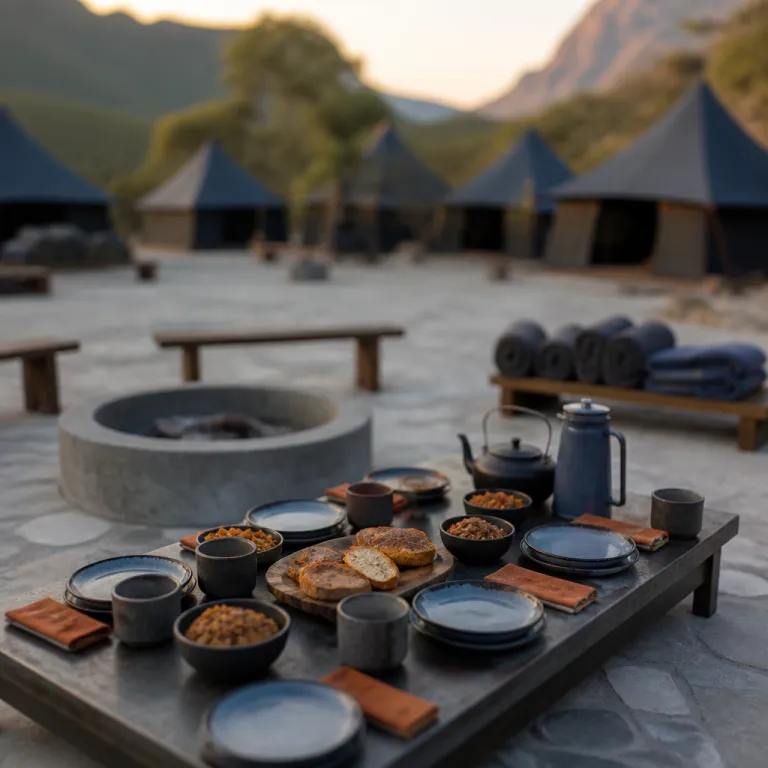
After movement, the most memorable part of a wellness glamping morning is often the fire and tea ritual. Rather than a buffet line, some camps light a small communal fire where a host prepares herbal infusions in cast iron kettles, inviting guests to warm their hands and talk softly while the sun climbs. One guide at a Scandinavian-style tented camp describes it as “the moment when people finally exhale,” a slow start that stands in deliberate contrast to hotel culture, where coffee is grabbed on the run and the day’s emails arrive before the first sip.
Cold water immersion has become the other defining ritual of high calibre wellness retreats, whether through wild swimming in a nearby river or purpose built plunge pools beside the tents. Properties that offer this experience usually brief guests carefully, explaining the benefits for circulation and mental clarity while emphasising that participation is free choice rather than a test of toughness. Studies cited by the World Tourism Organization and wellness researchers note that short, supervised cold dips can improve perceived energy and mood, and families often adapt the practice, with adults taking the full plunge while children paddle at the edge, turning what could feel extreme into a shared, joyful moment.
Between fire and water, the morning becomes a choreography of contrasts that sharpens the senses. Warmth from the flames, coolness of the plunge, silence of meditation and low conversation around the circle all contribute to a retreat experience that feels both elemental and refined. Camps that manage this balance tend to attract repeat guests who value wellness not as a performance but as a series of small, well held rituals that make every day feel quietly significant.
Family friendly wellness retreats: structure, pricing and what guests remember
For families booking a wellness glamping morning routine retreat, the pre breakfast schedule can make or break the stay. Children respond well to a clear sequence, and many camps adapt the classic model of wake up bell, morning stretch, light chores and shared ceremony to suit younger guests. Parents appreciate that this structure promotes discipline and enhances physical well being without feeling like school, especially when counsellor style staff guide activities with warmth rather than strictness.
From a practical standpoint, travellers should look closely at how price is structured around the morning programme. As a rough guide, many mid range nature retreats bundle dawn activities into the nightly rate, while higher end tented camps may charge an additional per person fee for yoga classes, forest bathing walks, yoga meditation sessions and special breakfasts. The most transparent wellness retreat properties clearly state whether these elements and meals included at breakfast are part of the nightly rate or charged separately, which matters when you are booking for several people, and corporate retreats or extended families often negotiate packages where morning activities, eco friendly amenities and a certain number of private sessions are bundled, making the overall retreat experience easier to budget.
When guests reflect on their stay, they rarely talk first about thread count or minibar selection. Instead, they remember the sound of the bell at dawn, the feeling of fresh air on their face as they stepped from the tent, and the sense of community built during shared stretches or silent walks before breakfast. For parents planning glamping with children who want a stay that feels both restorative and genuinely connected to nature, these early hours are the best indicator of whether a camp truly understands retreats and wellness or is simply borrowing the language.
How to choose the right wellness glamping morning routine retreat
Selecting a wellness glamping morning routine retreat begins with understanding your family’s rhythm. If your children wake early and thrive on activity, look for camps that publish a clear dawn to breakfast schedule with options like light yoga, short hikes and simple chores that mirror traditional camping routines. When a property can tell you exactly how long morning activities last and whether participation is encouraged for all ages, you know they have refined their programme beyond marketing language.
Next, examine how the camp integrates mind body practices into the landscape rather than importing a city studio model. Ask whether yoga retreats take place on outdoor platforms, whether meditation happens by water or in a private grove, and how the team handles bad weather without defaulting to an indoor room that feels like any other hotel. Properties that speak confidently about adapting yoga retreat sessions to wind, light and temperature usually have real experience guiding guests through changing conditions.
Finally, consider how the camp balances privacy and community in its morning design. Families often appreciate a mix of shared activities, such as forest bathing walks or group stretches, and quieter moments where they can enjoy a private terrace or tent side tea before joining others. When a host can explain how they support digital detox, manage noise at dawn and create space for both introverts and extroverts, you are likely looking at a wellness retreats specialist rather than a generic glamping operator.
FAQ
What time do most wellness glamping camps start their morning routine ?
Many wellness focused glamping camps align with classic camp schedules and begin their morning routine around 7:00, often with a gentle bell instead of an alarm. Light stretching, short walks or simple yoga classes usually follow within fifteen minutes, creating about one hour of structured activity before breakfast. This timing gives guests enough space to wake gradually while still making full use of the quietest part of the day.
Are morning activities at a wellness glamping retreat mandatory ?
Participation is strongly encouraged because the morning sequence is central to the retreat experience, but most luxury tent properties stop short of making it strictly mandatory. Families can usually opt out of specific elements, such as cold water immersion, while still joining shared stretches or meditation. Camps that specialise in wellness retreats tend to design their programmes so activities feel inviting rather than compulsory.
What types of morning exercises are typically included before breakfast ?
Common morning exercises include light stretches, short guided hikes, gentle yoga and simple breathwork sessions. Some camps add forest bathing walks, where guests move slowly through woodland with a focus on sensory awareness rather than distance covered. The emphasis is on preparing the body and mind for the day, not on intense training or performance.
How should families pack for a wellness focused glamping stay ?
Families should pack comfortable clothing that layers easily for cool dawn temperatures, along with personal hygiene items and any preferred yoga mats or swimwear for cold water immersion. Early mornings mean warm socks, light hats and soft sweaters are especially useful when stepping from tent to fresh air. It is also wise to bring simple analog distractions, such as books or sketchpads, to support a digital detox during quiet pre breakfast hours.
Is a wellness glamping morning routine suitable for children and teens ?
Structured yet gentle morning routines work well for most children and teens, particularly when activities are adapted by age. Camps that specialise in family friendly wellness retreats often offer playful versions of yoga, shorter walks and flexible meditation options so younger guests stay engaged. Parents should ask how counsellors are trained to support different ages and whether any activities have age specific guidelines.
Sources
World Tourism Organization (UNWTO); Global Wellness Institute; Adventure Travel Trade Association; Japanese studies on shinrin-yoku (forest bathing) and stress reduction.