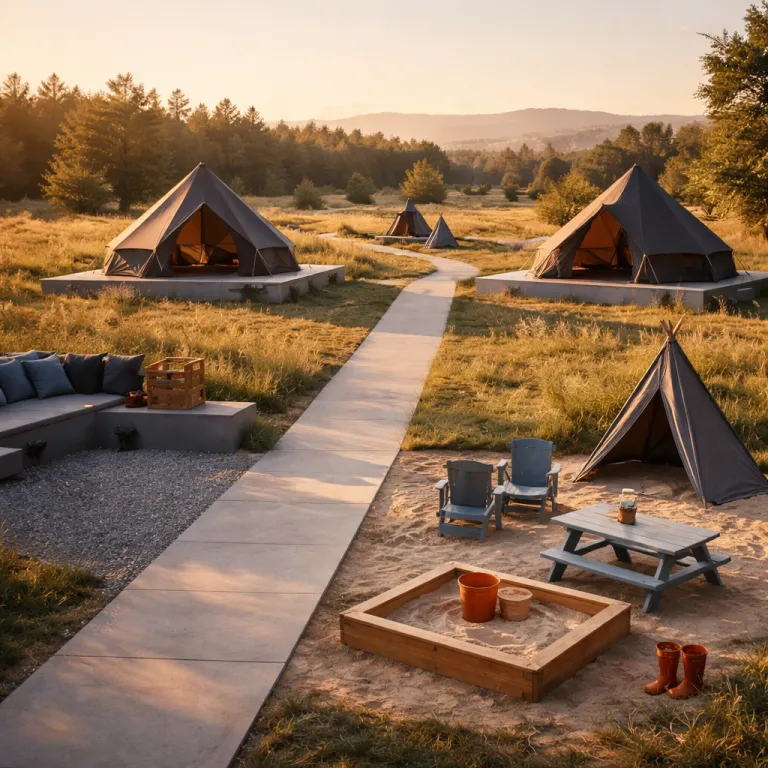
Why glamping with kids family demands a different checklist
Glamping with kids family is not just camping with nicer sheets. When you book a luxury camping stay as a parent, you are balancing romance, river sunsets, and wood smoke with nap schedules, ensuite bathroom access at night, and the reality that kids will touch every zip and buckle. A property that feels like the best glamping escape for couples can feel chaotic for families if the tents, activities, and safety standards are not designed with children in mind.
Premium families are an underserved segment in many glamping sites across the United States, even as demand quietly rises. Operators talk about canvas thread counts and designer furniture, yet parents care more about whether glamping tents sit on secure platforms, how far the private bathroom is from the bed, and whether the path is lit when a child needs the toilet at three in the morning. When you plan a family glamping vacation in a tented camp, the non negotiables shift from champagne on arrival to whether the site layout lets you supervise kids easily while still feeling on holiday.
Industry data shows that the average cost per night for glamping in the USA sits around 150 USD, but luxury camping for families often runs two or three times that once you factor in larger tents with multiple rooms and peak season pricing. According to Glamping.com’s 2023 market overview, mid range canvas units commonly start near this figure, while high end suites for four or more guests climb well beyond it in popular regions. This is why you must interrogate each site before you commit, asking how many people each unit really sleeps, whether there are family friendly safety features, and if the property welcomes children or merely tolerates them. As one New England parent put it after a summer stay, “the tent was beautiful, but no one had thought about where a four year old goes at 2 a.m.” A well chosen family glamping stay can deliver bonding, relaxation, and outdoor activities in one neat package, but only if the infrastructure and service culture are aligned with kids from the start.
The non negotiables: tent layout, bathrooms, and safety when glamping with kids family
For any glamping with kids family trip, tent size is not a luxury detail, it is a safety and sanity issue. Look for glamping tents or cabin rentals that offer at least a two room layout, so parents can have a little private space while still hearing every rustle from the kids’ beds. Properties like The Resort at Paws Up in Montana and Under Canvas near Yosemite, both profiled in 2022 family travel features in major US magazines, have suite tents with separate sleeping areas that work far better for families than a single open plan canvas room.
Bathroom access is the second non negotiable for any family glamping stay, especially with younger children who wake in the night. Ideally, you want tents with ensuite bathrooms, or at the very least a private bathroom hut just a few metres away on a flat, well lit path. When a site offers only shared facilities at a distance, that might suit adults on a minimalist camping trip, but it becomes stressful with kids who cannot safely walk alone in the dark.
Safety around platforms, fire pits, and wildlife is the third pillar that separates friendly glamping for families from a pretty but impractical camping site. Ask whether tent decks have railings, how close the river or lake is to the sleeping area, and whether staff patrol paths at night in regions where wildlife wanders through. On a well run family friendly property, glamping site staff act as facilitators, guiding parents on boundaries, explaining which areas to avoid after dark, and helping you leave the anxiety behind so you can actually enjoy your time under canvas. One Colorado camp manager describes their approach simply: “we walk the site at dusk, check every lantern, and make sure parents know exactly where kids can roam.”
Matching the right glamping sites to your children’s ages
Not every luxury camping site suits every age group, and this is where many families miscalculate. Toddlers need contained decks, soft ground, and short walking distances between tents, dining areas, and activities, while teenagers crave more independence, longer hikes, and perhaps a hot tub or river swim that feels slightly adventurous. When you plan glamping with kids family holidays, match the property’s terrain, layout, and programming to the specific stage your children are in, not to a generic idea of family travel.
For families with very young kids, look for family friendly glamping sites near a state park or national park that offer stroller friendly trails, simple nature walks, and supervised play corners in the main lodge. School age children thrive in sites where glamping tents cluster around a central fire pit, so they can move between s’mores, stargazing, and early night games while parents linger nearby with a glass of wine. Teenagers, by contrast, often prefer larger family glamping suites or cabin rentals with a separate annex, where they can retreat with a book or headphones after a long camping trip day.
Properties in the United States vary widely in how clearly they communicate age policies, and many luxury tents hide minimum age rules deep in the booking conditions. Before you confirm a family vacation, ask directly whether the site accepts babies, whether there are quiet hours that might clash with your kids’ rhythms, and how many families typically stay there each season. A camp that welcomes several families every weekend will usually have staff, equipment, and meal patterns tuned to life with kids, while a place that hosts mostly couples may feel tense the first time your child laughs loudly at breakfast.
Activities that actually work for glamping with kids family
Programming is where glamping with kids family either sings or falls flat. Many luxury camping sites lean heavily into adult wellness, offering sunrise yoga, long spa rituals, and wine tastings that leave children bored and restless. When you evaluate a site, look beyond the glossy brochure and ask what kids will actually do between breakfast and night, hour by hour.
The strongest family glamping properties in the United States build their days around guided nature programs, hands on workshops, and unstructured play in safe, visible areas. Think junior ranger walks in a nearby national park, supervised river paddles with life jackets, or simple wood craft sessions where children learn to build shelters and light a campfire. S’mores nights, stargazing sessions, and storytelling circles sound simple, yet they often become the highlight of a camping trip, because they bring families and glamping site staff together around a shared flame.
Practical guidance for families is refreshingly clear on the basics that make these activities work. Pack appropriate clothing for the season, bring insect repellent, and plan a loose outline of activities in advance so you are not scrambling for ideas at dusk. These simple steps, combined with the reminder that glamping is glamorous camping with amenities and that many sites do cater to families with kids, capture the balance between comfort and preparation that defines the best glamping stays. When parents arrive with the right layers, a flexible mindset, and a rough plan, they can relax into the rhythm of the site and let children lead the pace of the day.
Budget reality and where the value lies for families
Luxury glamping with kids family is rarely a budget option, and pretending otherwise does parents a disservice. A canvas suite that costs a couple 400 USD per night can easily climb toward four figures once you add extra beds, meals for four, and peak season surcharges. Under Canvas Yosemite, for example, prices its El Capitan Suite for up to six guests at close to 1 000 USD per night in busy periods, according to 2023 rate tables, which is two or three times the average glamping rate quoted for the wider market.
So where does the value sit for families who choose glamping sites over traditional hotels or basic camping grounds? First, in space and layout, because a well designed family glamping tent with separate sleeping zones can replace two standard hotel rooms while keeping everyone under one canvas roof. Second, in the quality of time together, as shared fire pits, guided hikes, and simple river swims create memories that feel richer than another city break in New York City or a quick dash through York on a rainy weekend.
Third, value emerges in the way a property supports parents as supervisors rather than entertainers in chief. When glamping site staff act as facilitators, leading activities and quietly managing logistics, parents can step back and enjoy the camping trip instead of orchestrating every moment. For families who travel often, it can be worth paying more for a site that operates year round, offers flexible meal times, and has a proven track record with families, rather than chasing the cheapest rate at a place that will leave everyone exhausted.
How to spot genuinely family friendly glamping, not just tents with a markup
From the outside, many luxury camping sites look similar: canvas tents, a photogenic river, and a promise of star filled nights. The difference between a truly family friendly property and a place that merely allows children lies in the details of service, communication, and design. When you read between the lines of a website or booking page, you can usually tell whether families are central to the story or an afterthought.
Start with the language around glamping with kids family on the site itself. If the property highlights family glamping packages, shows real images of families at play, and lists specific activities for different ages, that is a strong signal that children are part of the core audience. If, by contrast, kids appear only in the fine print under “extra guests” and the gallery is all couples in hot tub suites, you may find that your family vacation feels slightly out of place once you arrive.
Next, look at the physical product: are there multiple glamping tents configured for families, or just one token unit tucked at the back? Do cabin rentals and tents with ensuite bathrooms sit close to the main lodge, or are families pushed to the far edge of the site near the wood pile and staff parking? A property that loves hosting families will place them near the heart of the action, with easy access to meals, activities, and staff, while a reluctant host will quietly encourage parents to leave kids behind next time. For a deeper sense of how high end outdoor stays can be curated thoughtfully, the editorial guide to elevated retreats in LuxuryTentStay’s 2022 article about Australian luxury experiences offers a useful benchmark for service standards, even if your own trip stays closer to home.
Planning a seamless family glamping stay in the United States
Once you have chosen a property, the way you plan your camping trip can make the difference between chaos and calm. Treat the journey like any other premium travel experience, building in buffer time for delays, packing lists for each child, and a clear arrival plan agreed with the site. Many families aim to reach the camp well before night falls, so kids can explore the layout, test the tent zips, and meet glamping site staff while there is still light.
Because glamping blends camping and hotel style service, packing requires a slightly different mindset. You can leave the heavy gear at home, yet you still need outdoor clothing for shifting season temperatures, insect repellent, and a few familiar comforts that help kids settle, such as a favourite pillow or bedtime book. Parents act as supervisors, but local guides and staff become partners in keeping children engaged, whether through informal chats about wildlife or structured activities along the river or in nearby state park trails.
Finally, remember that the aim of glamping with kids family is not perfection, but connection. Some moments will be messy: mud on the tent floor, a sudden rainstorm, a child who refuses to leave the hot tub because the stars are too beautiful. If you choose a site that genuinely welcomes families, trust the team’s experience, lean into the slower rhythm of canvas life, and let the small imperfections become part of the story your family will tell for years.
Key figures for glamping with kids family
- The average cost per night for glamping in the USA is around 150 USD according to Glamping.com’s 2023 pricing snapshot, but luxury family tents in peak season can cost two or three times more.
- There are an estimated 2 000 glamping sites across the USA, based on data from GlampingHub.com’s 2022 listings, giving families a wide range of locations from coastal woodlands to mountain state park settings.
- Family glamping trips typically follow a simple timeline of arrival, setup, activities, meals, rest, and departure, which helps parents structure each day for kids while still leaving room for spontaneity.
- Premium properties such as Under Canvas Yosemite offer suite tents for four to six guests, illustrating how larger layouts have become central to the family segment of the luxury camping market.
- Eco friendly accommodations and unique lodging options, including glamping tents and cabin rentals, have grown in popularity since the pandemic, as families seek outdoor stays that balance comfort with nature immersion.
FAQ about glamping with kids family
Is glamping suitable for young children ?
Yes, many sites cater to families with kids, but you must check age policies, tent layouts, and safety features before booking. Properties that highlight family friendly programming and offer tents with ensuite bathrooms or nearby private facilities tend to work best for younger children. Always ask how far your unit is from shared areas and whether paths are lit at night.
What should we pack for a family glamping trip ?
Plan as you would for a comfortable camping stay, bringing outdoor clothing for changing weather, insect repellent, and any child specific items such as favourite toys or sleep aids. Even when luxury camping provides linens and amenities, extra layers, headlamps, and simple snacks can make evenings smoother with kids. A short checklist shared with older children turns packing into part of the adventure.
Do glamping sites provide meals for families ?
Some glamping sites provide full board dining, while others offer only breakfast or self catering facilities, so always confirm meal options in advance. Families often benefit from flexible dining times, kid friendly menus, and the option to eat early after a long day outdoors. If meals are not included, check whether nearby towns or parks have suitable restaurants before you arrive.
How do I know if a glamping site is truly family friendly ?
Look for clear references to family glamping on the website, photos of real families on site, and detailed descriptions of children’s activities. A genuinely friendly glamping property will specify age ranges for programs, provide information about safety measures, and show multiple tent types configured for families. If children appear only in the fine print or as an extra fee, the culture may be less welcoming.
Is glamping safer than traditional camping when travelling with kids ?
Glamping can be safer for families because tents often sit on stable platforms, bathrooms are closer, and staff are on hand to help in case of issues. However, you still share many of the same outdoor risks as regular camping, such as uneven ground, open fires, and wildlife. The safest choice is a site where staff act as facilitators, parents remain active supervisors, and children are briefed clearly on boundaries from the first day.