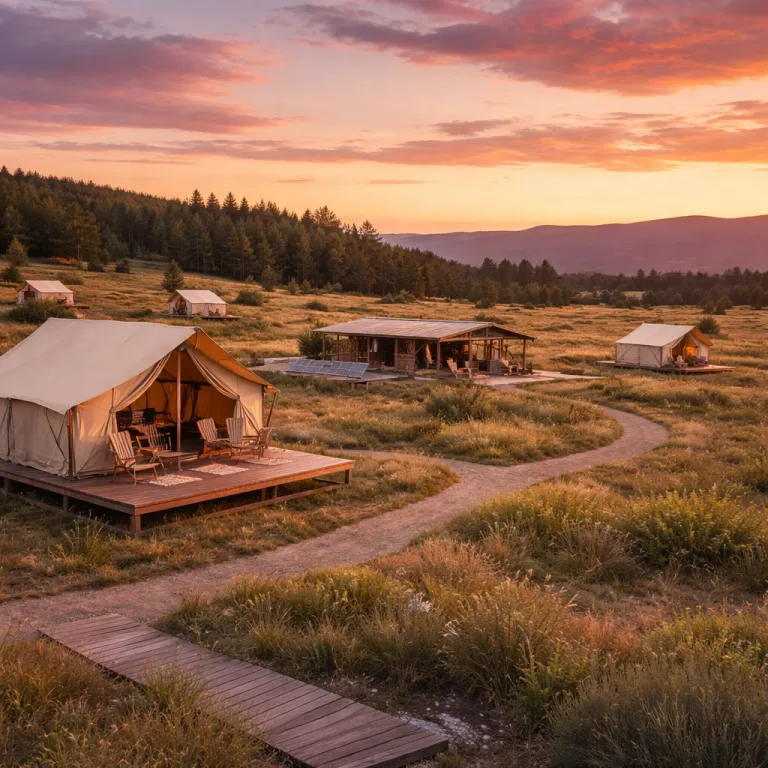
The authenticity spectrum in luxury tents: canvas as stage set or way of life ?
Glamping sits on a fault line between genuine outdoor hospitality and theatrical set design. The glamping industry has grown into a global hospitality segment where the same safari tent can appear in Tuscany, Texas, or Tanzania, and the question is whether the tent frames the landscape or hides it. For solo travelers chasing genuinely sustainable, authentic glamping, the first task is to understand where a property sits on this spectrum.
At one end are glamping sites where the tent is the experience, and every decision about luxury, comfort, and service flows from the surrounding nature. These sustainable glamping operations treat canvas as infrastructure for eco tourism rather than décor, using renewable energy, composting toilets, and rainwater harvesting to reduce environmental impact while still delivering high quality glamping accommodations. At the other end are outdoor accommodations where the tent is a prop, the eco language is marketing, and the sustainability story collapses as soon as you ask about waste management or water use.
Data from the wider industry shows how blurred the lines have become, with 68 % of hospitality operators using sustainability language without verifiable certification (Goodwin, H., “Greenwashing in Tourism,” International Centre for Responsible Tourism, 2020). When you read a market report about glamping growing fast, remember that scale invites standardization, and standardization often pushes operators toward identical amenity kits, scripted experiences, and copy pasted digital guidebooks. For guests who care about sustainable travel, the real luxury is not the plunge pool but a business model that treats the land as a partner rather than a backdrop.
Authenticity in glamping experiences starts with how a camp is placed on the land, not with how many cushions sit on the daybed. A truly eco conscious glamping business will orient tents for natural ventilation, shade, and views, then add discreet comforts that respect both privacy and wildlife corridors. Compared to traditional resorts, these outdoor hospitality pioneers accept limits, allowing the night sky, the wind, and the dawn chorus to do the heavy lifting for the guest experience.
Look closely at how a property talks about its local context, because language reveals priorities. Operators who speak first about nature, community partnerships, and sustainable practices usually run glamping accommodations that feel grounded rather than generic. Those who lead with Instagrammable décor, bottomless prosecco, and vague eco friendly claims often treat sustainability as a style, not a standard.
Certification can help, but it is not a guarantee of soul. Green Key, EU Ecolabel, and ECOCAMPING have raised the bar for the glamping industry, yet many hospitality brands still treat these labels as compliance badges rather than as frameworks for continuous improvement. For travelers, the most reliable signal remains the alignment between what is promised online and what you actually see under canvas when you arrive.
Standardization, scaling, and the risk of copy paste sustainability
The glamping market is no longer a niche; it is a structured industry with forecasts, segments, and investor decks. Analysts track how cabins and pods now hold the largest share of outdoor accommodations, while luxury tents fight to prove that canvas can scale without losing character. In this context, questions of glamping authenticity and sustainability become a stress test rather than a slogan.
Standardization shows up first in the hardware, with identical safari tents shipped worldwide and hospitality brands rolling out carbon copy layouts that ignore local climate and culture. You see the same outdoor showers, the same four poster beds, the same digital guidebooks promising eco friendly experiences, even when the glamping sites sit in radically different ecosystems. Compared to traditional hotels, these properties may still feel wild, but the underlying business logic is pure replication.
Then comes the software of hospitality, where scripted experiences replace genuine encounters. A truly sustainable glamping camp will design activities around local guides, seasonal rhythms, and the carrying capacity of the landscape, while a standardized operation sells the same sunset yoga and generic wine tasting regardless of place. When every guest receives the same timetable, the same talking points, and the same photo opportunities, the outdoor hospitality narrative starts to feel like a theme park.
Corporate retreats illustrate this tension clearly, especially when companies seek eco conscious incentives. Some operators now offer eco friendly corporate retreats in luxury tents that genuinely integrate sustainable practices, from low impact transport to local sourcing and measurable waste management. Others simply rebrand existing glamping experiences as sustainable travel products, adding a carbon offset line item while leaving the core operation unchanged.
Water and waste tell the truth faster than any brochure. Research compiled by the U.S. Environmental Protection Agency indicates that conventional flush toilets can use around 30 to 35 liters of water per person per day, a figure that matters in arid regions where glamping is growing fastest (EPA, “WaterSense at Work,” 2012). When a camp still relies on water intensive fixtures, single use plastics, and diesel generators, no amount of eco tourism rhetoric can hide the environmental impact.
For solo explorers booking through a luxury and premium platform, the challenge is to read between the lines of each listing. Ask whether the glamping business publishes an annual sustainability report, whether it tracks energy use per guest night, and whether it has a clear plan for waste management beyond the recycling bin. The properties that answer these questions well are usually the ones where your stay feels both indulgent and ethically defensible.
When certification helps, and when it just dresses the tent
Eco certification has become the hospitality industry’s favorite accessory, pinned to websites and lobby walls with equal enthusiasm. For glamping operators, the rise of Green Key, EU Ecolabel, and ECOCAMPING offers both a roadmap and a marketing tool, and the difference between those two uses defines whether certification protects authenticity or dilutes it. In the best cases, independent labels anchor sustainable glamping claims in measurable action rather than in poetic copy.
Responsible glamping sites treat certification as a floor, not a ceiling, using audits to refine sustainable practices year after year. They invest in solar panels, hemp or organic cotton canvas, and low impact infrastructure that reduces environmental impact while maintaining high quality comfort for guests. These eco conscious operators often work closely with local communities and environmental organizations, aligning their glamping business with conservation goals rather than just with occupancy targets.
There is another camp, though, where certification becomes a decorative badge. Here, hospitality brands chase the quickest route to an eco label, focusing on visible gestures such as bamboo toothbrushes while ignoring deeper issues like staff training, supply chain emissions, or long term land stewardship. In such outdoor accommodations, the gap between the sustainability report and the on the ground experience can be wide.
Travelers should treat certification as a starting point for questions, not as the final answer. Ask how often audits occur, what percentage of energy comes from renewables, and how the camp manages greywater and solid waste management across seasons. A property that shares clear data and invites scrutiny usually runs a glamping business where sustainability and luxury coexist comfortably.
Island and coastal glamping sites offer a useful lens, because their environmental impact is amplified by fragile ecosystems. Some of the most convincing examples are sustainable island tented resorts for eco conscious travelers that operate off grid, use rainwater harvesting, and cap guest numbers to protect reefs and mangroves. Compared to traditional beach resorts, these outdoor hospitality pioneers accept lower density and higher upfront costs in exchange for long term ecological resilience.
Certification bodies themselves acknowledge that labels are only one piece of the puzzle. Their guidance to travelers is clear : “Verify eco-certifications of glamping sites,” and “Research the site's sustainability practices,” and “Choose locations that support local communities” (Green Key Global, “Traveler Guidance,” 2022). When you combine these steps with your own on site observations, you move beyond green logos toward a more nuanced understanding of how authentic and sustainable a glamping stay really is.
A traveler’s framework for booking authentic, sustainable luxury tents
For solo explorers using a luxury tent booking platform, the real power lies in the questions you ask before you commit. Glamping is often defined as luxury camping that combines comfort with outdoor experiences, but that broad description hides a spectrum from deeply sustainable glamping to lightly themed pop up camps. A sharper personal framework helps you choose glamping accommodations where your money supports both nature and community.
Start with place, because authentic experiences grow from specific landscapes. Look for glamping sites that explain how their tents are integrated into the terrain, how they protect wildlife corridors, and how they work with local guides and artisans to shape guest experiences. When a property talks fluently about its watershed, its reforestation projects, or its role in regional eco tourism, you are usually in safe hands.
Next, interrogate operations rather than aesthetics. Ask how the camp handles energy, water, and waste management, and whether it uses tools such as solar panels, composting toilets, and rainwater harvesting to reduce environmental impact. Properties that share concrete numbers rather than vague eco friendly claims tend to run a more serious glamping business.
Technology can either flatten or enrich your stay. Some of the most thoughtful operators use digital guidebooks not as a gimmick but as a way to brief guests on sustainable practices, local etiquette, and low impact trails before they even unzip the tent. Others rely on screens to compensate for a thin connection with nature, turning what should be an outdoor hospitality immersion into just another content stream.
Pay attention to how a camp positions its luxury, because that reveals its values. A property that boasts about thread counts and champagne towers may still be enjoyable, yet it rarely leads the glamping industry on sustainability. One that talks instead about silence, starlight, and the feeling of waking to birdsong ten metres from your bed is more likely to align with a more thoughtful, low impact form of glamping.
Finally, consider how your own travel patterns fit into the bigger picture of sustainable travel. Choosing train over plane where possible, staying longer in one place, and supporting glamping growing in regions that prioritize conservation all amplify the impact of your booking choices. If you want a benchmark for balancing indulgence and responsibility, look at thoughtfully designed luxury camping escapes with spa level comforts that still foreground low impact design and local partnerships.
Key figures shaping authentic and sustainable glamping
- The global glamping market is projected to grow from around 3.8 billion dollars in 2020 to just over 7 billion dollars by 2030, reflecting a compound annual growth rate above 10 %, which intensifies pressure to standardize operations while also expanding opportunities for sustainable glamping leadership (Grand View Research, “Glamping Market Size, Share & Trends Report,” 2022).
- Research from the International Centre for Responsible Tourism indicates that 68 % of hospitality operators now use sustainability language without holding verifiable certification, highlighting the need for travelers to look beyond marketing when assessing eco friendly claims in the hospitality industry (Goodwin, H., “Greenwashing in Tourism,” ICRT Occasional Paper 28, 2020).
- Studies summarized by the United Nations Environment Programme show that water efficient fixtures and composting toilets can reduce water use by roughly 30 to 50 liters per guest per day, a significant reduction in environmental impact for glamping sites operating in water stressed regions (UNEP, “Sustainable Water Management in Tourism,” 2013).
- Global traveler surveys consistently report that more than 80 % of guests consider sustainable travel important, which is pushing hospitality brands and glamping business owners to integrate more rigorous sustainable practices into their outdoor accommodations (Booking.com, “Sustainable Travel Report,” 2023).
- Industry analyses suggest that cabins and pods now account for close to 45 % of the glamping segment, meaning that traditional canvas based glamping accommodations must differentiate through authenticity, nature immersion, and demonstrable sustainability rather than through hardware alone (Allied Market Research, “Glamping Market by Accommodation Type,” 2022).
- Operational case studies indicate that using recycled and locally sourced materials in tent construction can reduce construction related waste by up to 50 %, supporting both eco tourism goals and long term cost efficiency for outdoor hospitality operators (UNEP, “Sustainable Construction in Tourism,” 2019).
References
- Goodwin, H. – “Greenwashing in Tourism,” International Centre for Responsible Tourism Occasional Paper 28, 2020.
- United Nations Environment Programme – “Sustainable Water Management in Tourism,” 2013, and “Sustainable Construction in Tourism,” 2019.
- Green Key Global – criteria and certified property database for sustainable accommodations (Traveler Guidance, 2022).